
Three weeks ago I paused Cosmic: Alliance because the captain's face and costume were costing more than I could keep spending. I said I would come back when the tools took another step. I did not expect to come back this soon, but a question kept nagging at me: how much of the earlier result came from the starting material?
Every version of Aelar so far began with borrowed shapes. The body, rig and skin started from CC0 MakeHuman data, and the later face work was pulled toward a dense Meshy sculpture. Both gave us a head start. They also made it hard to tell what the AI was contributing to the likeness.
This time I worked with Claude Opus 5.5 in Claude Code, running on my own PC with Blender and my graphics card. I tried two things in one day. First, Aelar from nothing at all. Second, the opposite: take the Meshy sculpture that defeated us last time and see whether it could become a character that walks and talks. I asked for every screenshot to be kept, failures included, and most of them are in this post, along with how the results compare with Astra's.
Part one: from nothing
The rules were strict. No MakeHuman mesh, rig or texture. No Meshy reference. Nothing from the Aelar that is in the game today. The only visual reference is the concept sheet from the first post: the full-body front view, the side view and the painted close-up.

Opus 5.5 failed at this completely. It cannot take concept art to 3D at all. After ten passes it had not produced anything that looks like Aelar, or even like a human being.

Part two: bringing the Meshy sculpture to life
Well, starting from scratch was a huge disappointment. Oh my god. Anyways, let's see if Opus 5.5 can start with the high quality model and fix it up for animation.
The Meshy sculpture from the last post already looks like her. What it could not do was move. It is a single fused surface of almost two million triangles: skin, coat, trousers, boots and hair all one piece, with no skeleton. The last time we tried to put its jacket on a rig, the sleeves turned into long jagged strips.
So I set Claude a different goal. Turn the static sculpture into a character that walks and talks, at the standard of a high-end PC game, the kind of character you would show on stage at PAX West or BlizzCon. I asked it to keep putting the same question to itself after every render: does this look like a AAA model? Then keep iterating until it stopped making progress. I said it could use up to half of my five-hour usage allowance, and I left it to work.
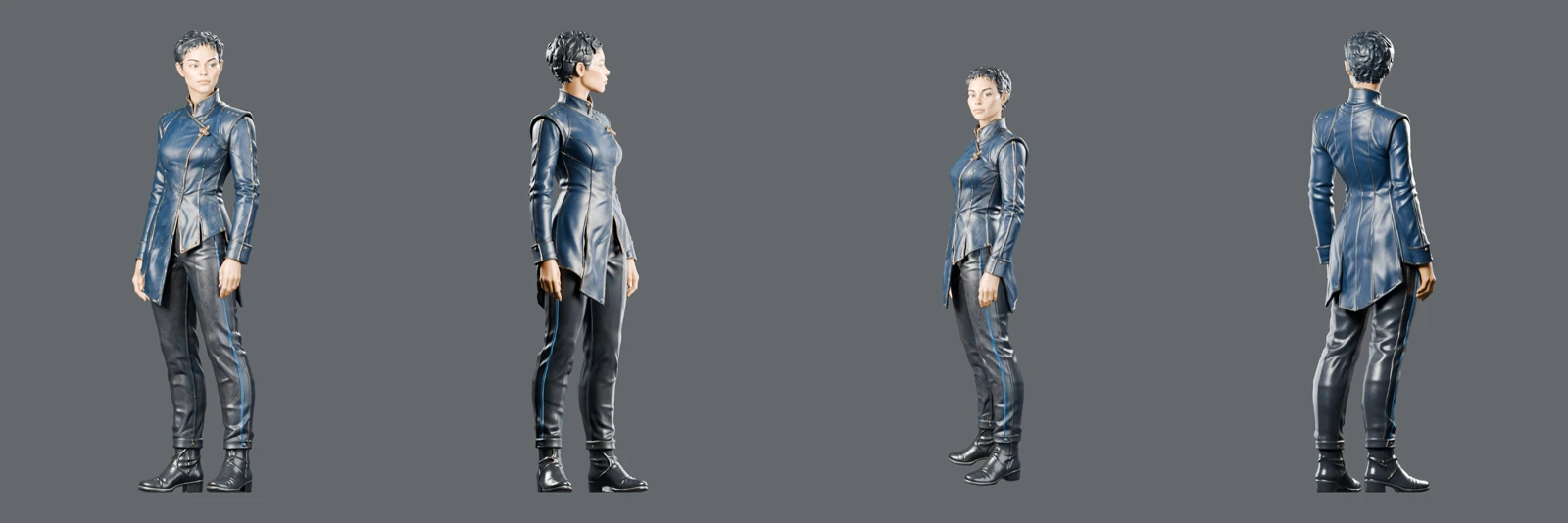
How it worked
Every step is a Blender script, run in order, so the whole character can be rebuilt from the original Meshy file at any time. After each change Claude rendered the result, looked at it, wrote down what was wrong and went again. Every render went into an archive with a one-line note, which is where most of the images below come from.
It also measured problems instead of eyeballing them. The most useful tool was a stretch probe. It plays a clip, finds every edge of the mesh that stretches to more than two and a half times its resting length, and counts them by which bones are pulling. That turned "the coat looks torn" into a number it could drive down.
A skeleton for a fused surface
The first skeleton and skin weights looked reasonable at rest and fell apart the moment she moved. Her arms hang against the coat in the sculpture, and Meshy had fused them together where they touch. Raise the arms and the coat came with them.
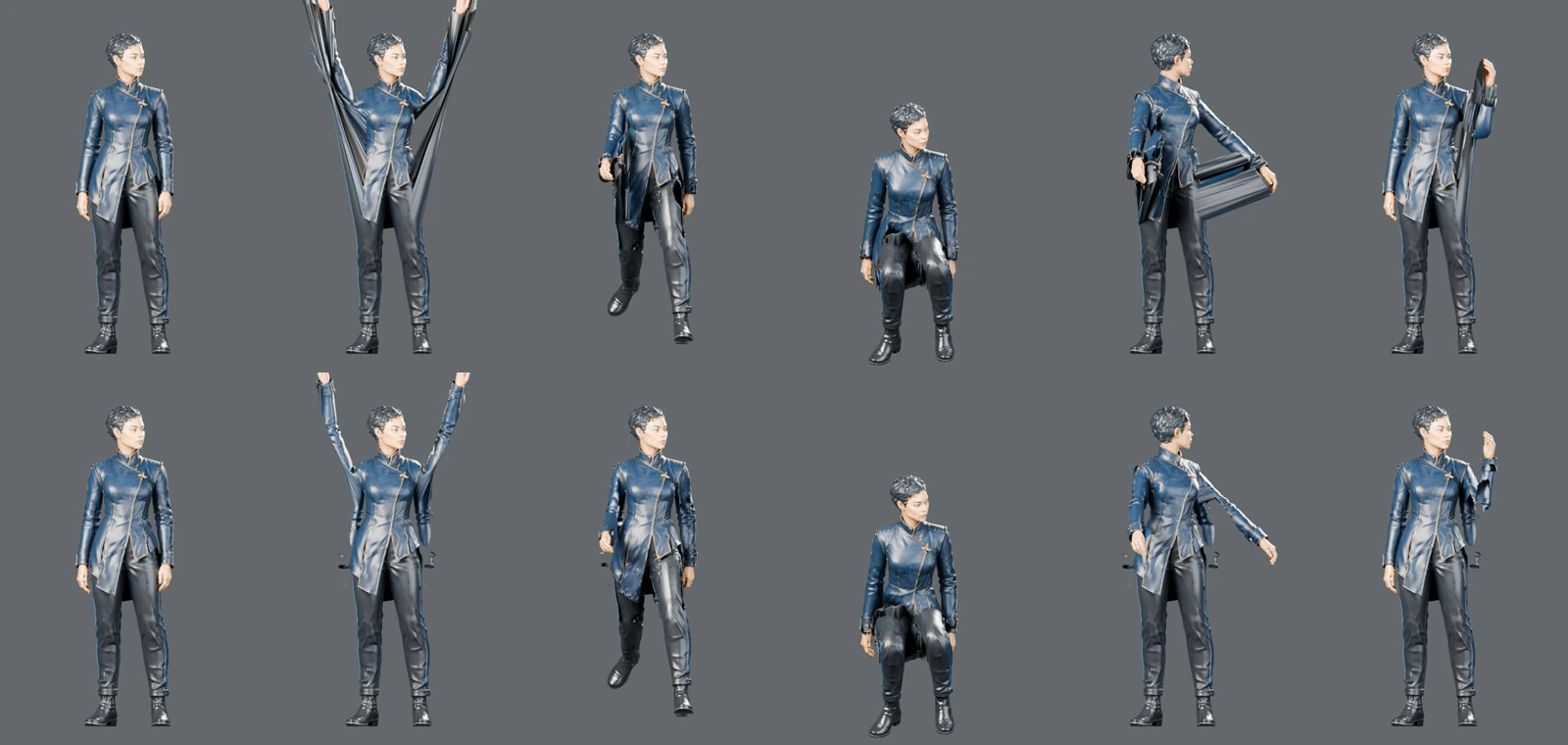
Each round removed one kind of failure. An arm bone could only claim the surface around the sleeve if that surface faced away from the arm, which kept the coat panel next to it on the hips. The hands were found by their skin colour and locked to the wrists. The triangles where Meshy had fused each forearm to the coat were cut away. One round made no difference at all. Probing the stretched edges showed why: a rule for the coat tails was mixing hip weight into the hands.
Then it retargeted the ten animation clips from the version of Aelar in the game. Her walk tore the coat at the waist until Claude found that one bone's resting direction differed by 89 degrees between the two skeletons. The stretch probe did the rest. Letting the coat tails follow the legs instead of the hips cut the edges stretched during the walk from 10,027 to about 1,000.
Turning her head
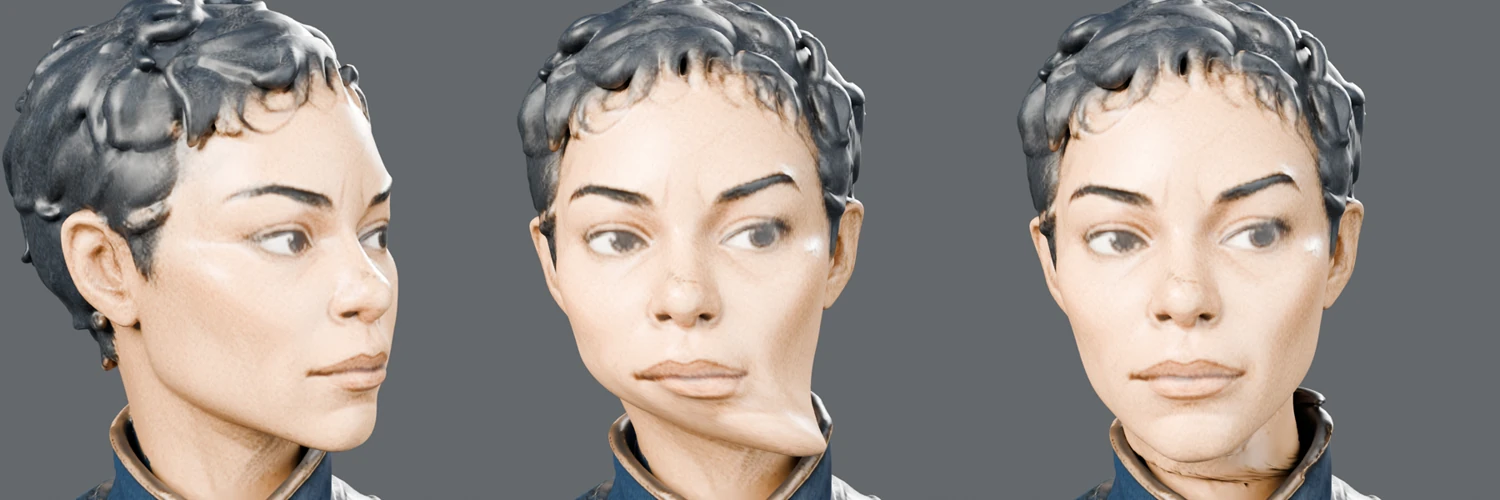
The sculpture's head is turned 43 degrees to her left, and every animation would have inherited that. The true angle came from finding the mirror plane that makes her face most symmetrical, and the head was turned back by that much. The first attempt twisted her chin along with it, because her chin sits only about two centimetres above her collar.
Real eyes
Meshy painted her eyes onto the surface of the face, gaze included, so she could never blink or look around. Claude cut the painted eyes out and put real eyeballs behind them. The first two tries were rough. The eyes bulged like goggles, then drooped into slits because the painted lash line covered the top of the painted iris.

The version that worked builds new eyelids around each eyeball and borrows their skin from what Meshy painted underneath, so the eyeliner lands on the lid where it belongs. Each eye sits on its own bone, and the blinks roll the lids down over the eyeballs.
A mouth that opens
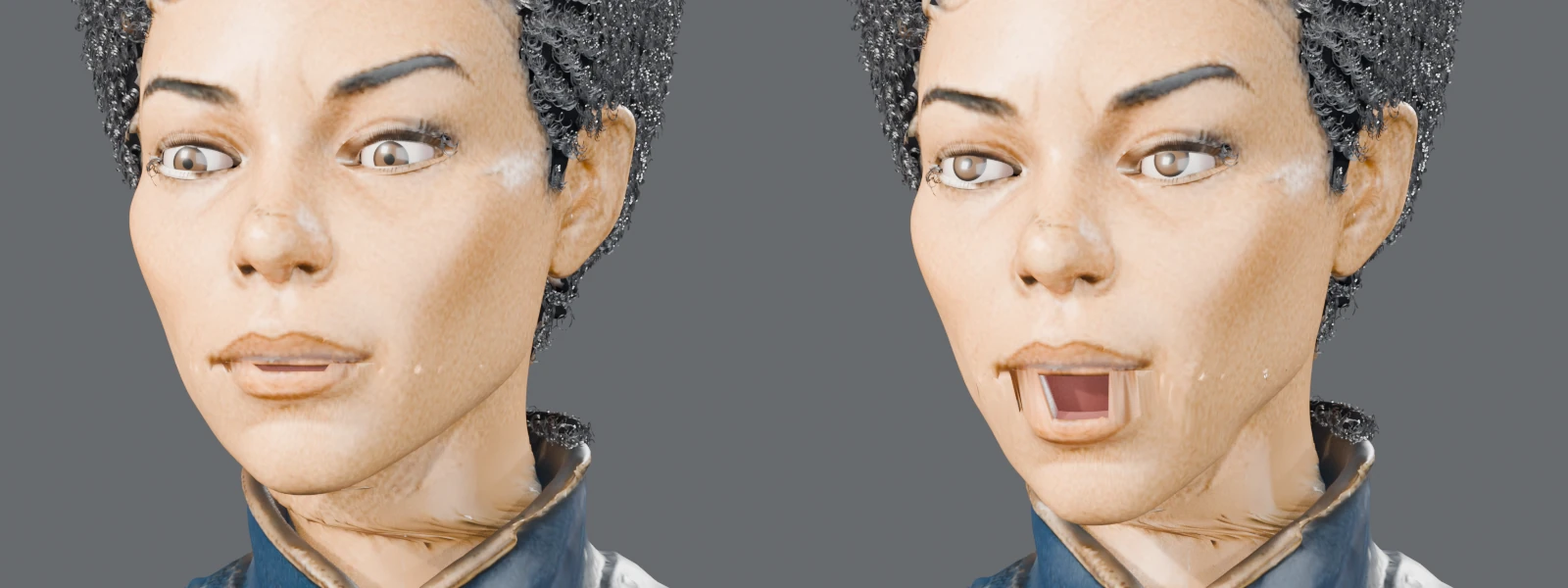
The lips were sculpted shut. Claude cut them apart along the line between them, gave the lips an inner surface, added a jaw bone, a dark mouth interior, teeth and a tongue, and a few mouth shapes for rounded and wide vowels. Then it synced her mouth to one of Aelar's recorded lines, opening the jaw with the loudness of her voice and choosing rounder or wider shapes from its tone.
The first talking test did not look right to me. Her mouth seemed to jiggle while staying closed, and I said so. Claude measured the gap between her lips as the jaw moved and found it closing instead of opening: the jaw bone was rotating the wrong way, pressing her lower lip seventeen millimetres into her upper lip at full volume. With the direction flipped, the mouth opens on the loud syllables and closes in the pauses.
Curls instead of clay
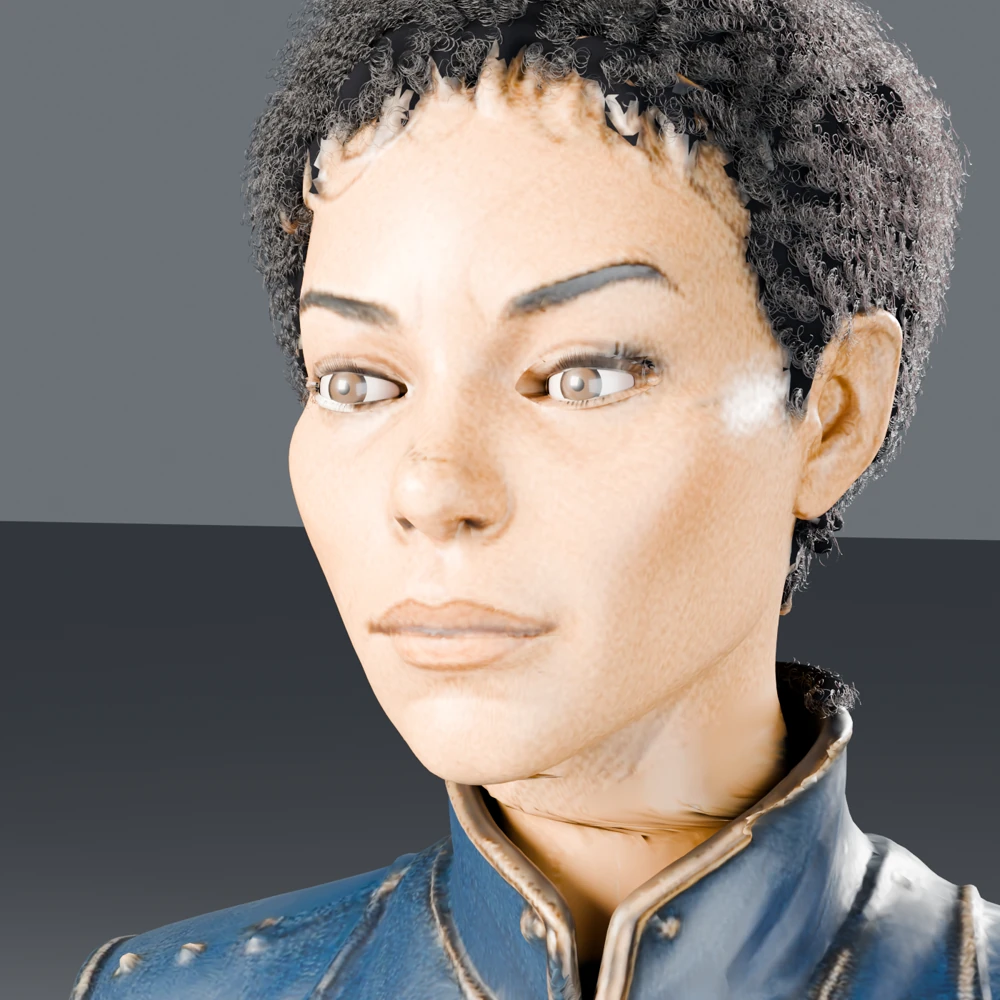
The sculpted hair read as glossy clay from any distance. It became a dark scalp with 22,000 coiled strands growing from it, grouped into small clumps so they form curls rather than frizz, and kept them short and tapered at the sides the way the concept shows them.
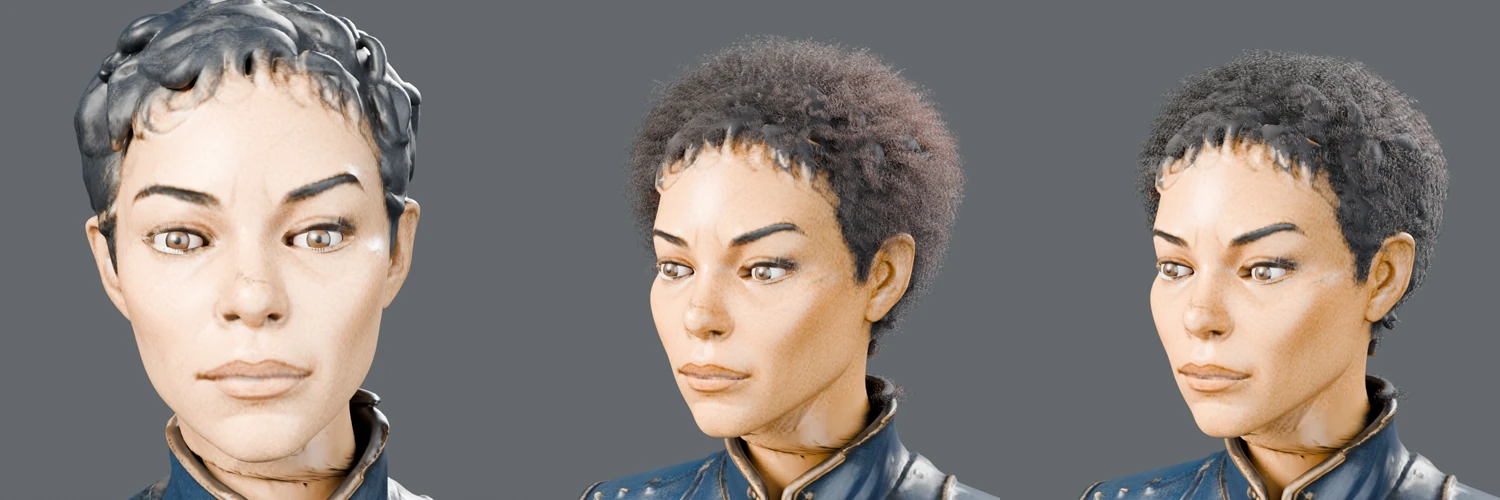
Walking and talking
Here she is. The walk is one of the clips from the game, retargeted onto the new skeleton. The talking test uses her recorded line. Both are rendered in Blender's real-time engine, and neither plays until you press play. The talking test has sound.
Astra and Opus 5.5, side by side
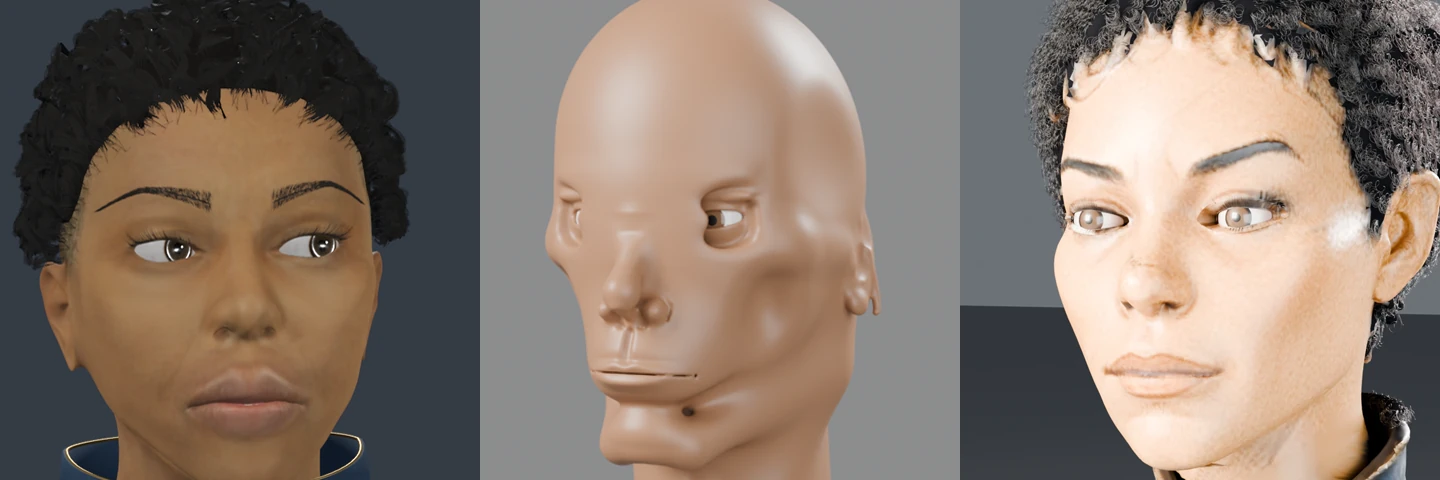
For building a character from scratch, Astra is still better. Given an empty project, it gave me a playable blockout and a captain who could walk the bridge, operate a console and raise a cup. Given the concept art, Opus 5.5 gave me a bald clay head. Even so, Astra's from-scratch route will never pass a AAA bar.
What Opus 5.5 does well, and what Astra could not do, is take an existing 3D model, add bones and animate it. The model here came from Meshy, but it could just as easily be one generated on my own machine. The jacket that fell apart on Astra's rig stays on through a walk, the painted eyes became real ones, and the sculpted lips open and close. It is not perfect by any means, but it is significantly better than anything Astra managed with the same sculpture.
Where it stands
When I handed it over, the Meshy Aelar was a statue. A few hours later she walked, blinked, looked around and spoke a line. Because every step is a script, none of it is locked inside one Blender session, and the version of her in the game today is untouched.
Does she look like a AAA character? Not yet, but she is getting there, and Claude's notes said as much after every pass. The white patch on her cheek is lighting that Meshy painted into the skin texture, and a shader cannot remove it. The hairline is ragged where the sculpted hair meets her forehead. Her wide-open mouth is boxy, and there is a crease at the collar. The walk and the speech gestures come from our prototype clips, which were already stiff. And the coat is still fused to the body, so its tails can only follow her legs instead of swinging on their own.
Those are the jobs a character artist and an animator would take on next: repainting the skin without baked light, building a clean face, separating the coat into its own layer, and real motion capture. The difference from last time is where they would start. Instead of a sculpture that could not move, they would inherit a rigged character with working eyes, a working jaw and a script that rebuilds all of it.